Learn About Weight-Inclusive
Physical Activity

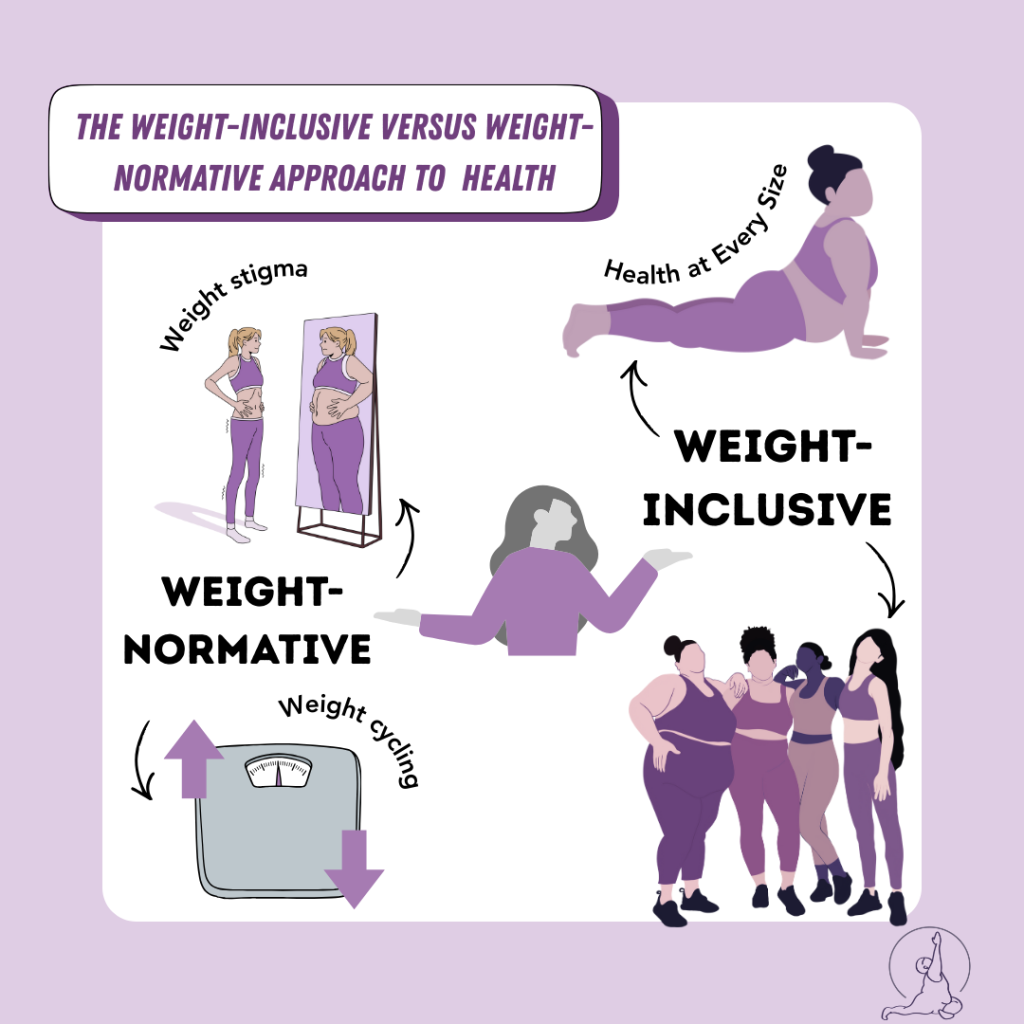
The weight-inclusive versus weight-normative approach to health

This article reviews existing research to compare the weight-inclusive and weight-normative approaches to health. The authors found that the weight-normative approach is not supported by evidence as a reliable path toward long-term health and wellbeing. The harms of this approach, including weight stigma, regain, and cycling, often outweigh the benefits. In contrast, the weight-inclusive approach is better supported by available evidence and is considered more ethical.

LINK
Tylka, T. L., Annunziato, R. A., Burgard, D., Daníelsdóttir, S., Shuman, E., Davis, C., & Calogero, R. M. (2014). The weight-inclusive versus weight-normative approach to health: evaluating the evidence for prioritizing well-being over weight loss. Journal of obesity2014, 983495. https://doi.org/10.1155/2014/983495

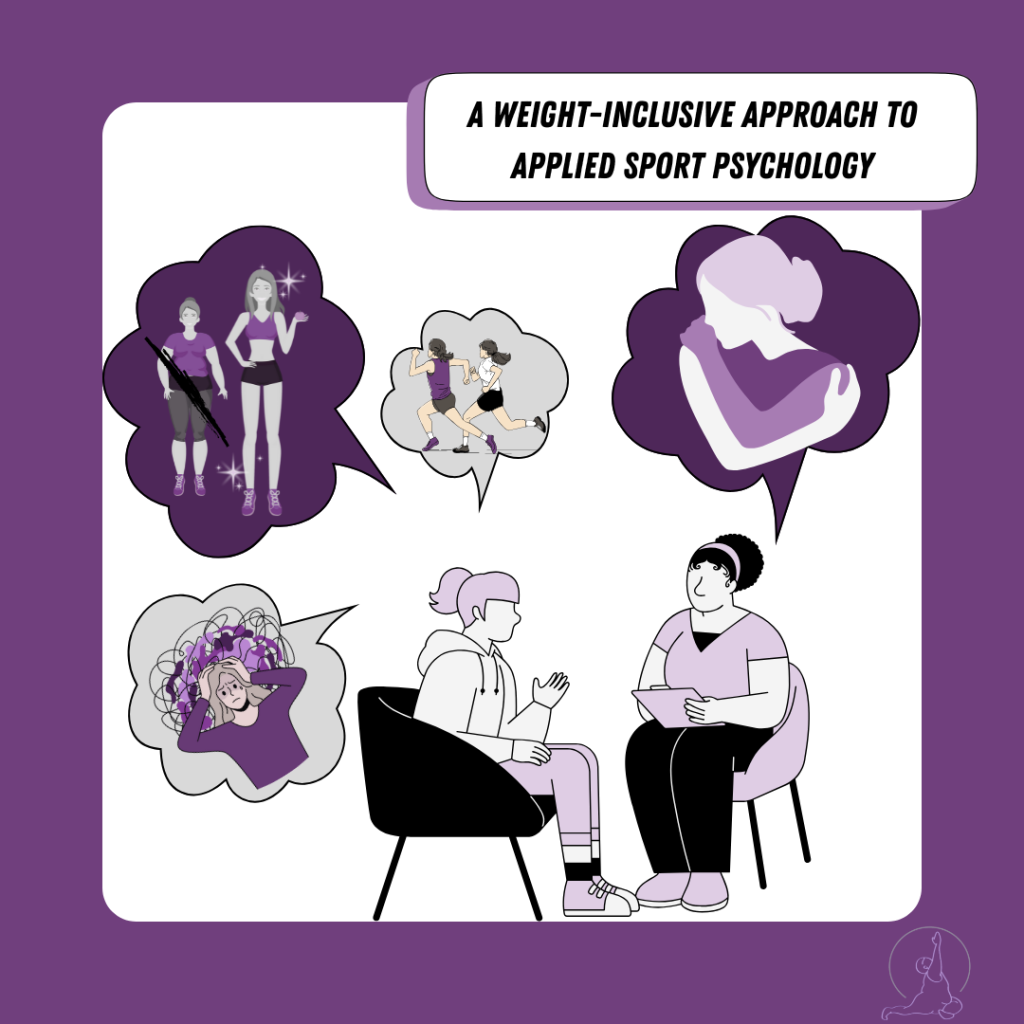
A weight-inclusive approach to applied sport psychology

The authors of this paper argue that a focus on weight or body composition can lead to serious physical and mental health harms for athletes. They also highlight sports psychology professionals as being uniquely positioned to counter prevalent weight-centric norms by adopting a weight-inclusive approach. Practical guides for integrating weight-inclusive principles are presented across three levels: intrapersonal, interpersonal, and structural.

LINK

Derbyshire, A., Lee, S., Bejar, M., Cordova, S., & Crocker, G. (2024). A weight-inclusive approach to applied sport psychology. International journal of sport and exercise psychology, 1–18. https://doi.org/10.1080/1612197X.2024.2431256

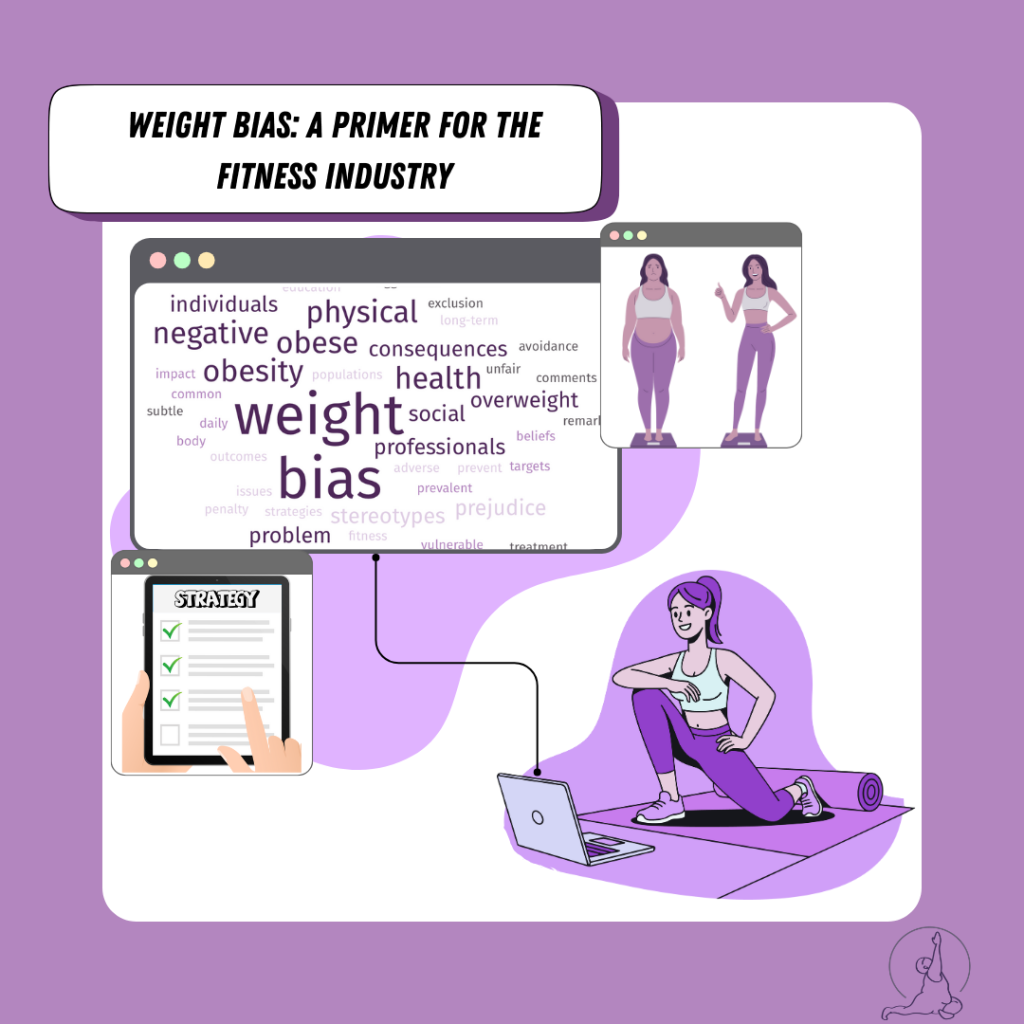
Weight bias: a primer for the fitness industry

This commentary aims to raise awareness of weight bias – the negative attitudes, stereotypes, and discrimination directed toward people with higher body weight – and discuss the implications for the fitness industry. It describes how these biases can discourage participation in physical activity, negatively impact mental health and self-esteem, and represent a barrier to inclusive, effective programming. The authors recommend that fitness professionals reflect on their own implicit or explicit biases, foster respectful environments, and promote health and fitness for all.

LINK

Puhl, R.M., & Wharton, C.M. (2007). Weight bias: a primer for the fitness industry. ACSM’s health & fitness journal, 11 (3), 7–11. https://doi.org/10.1249/01.FIT.0000269060.03465.ab

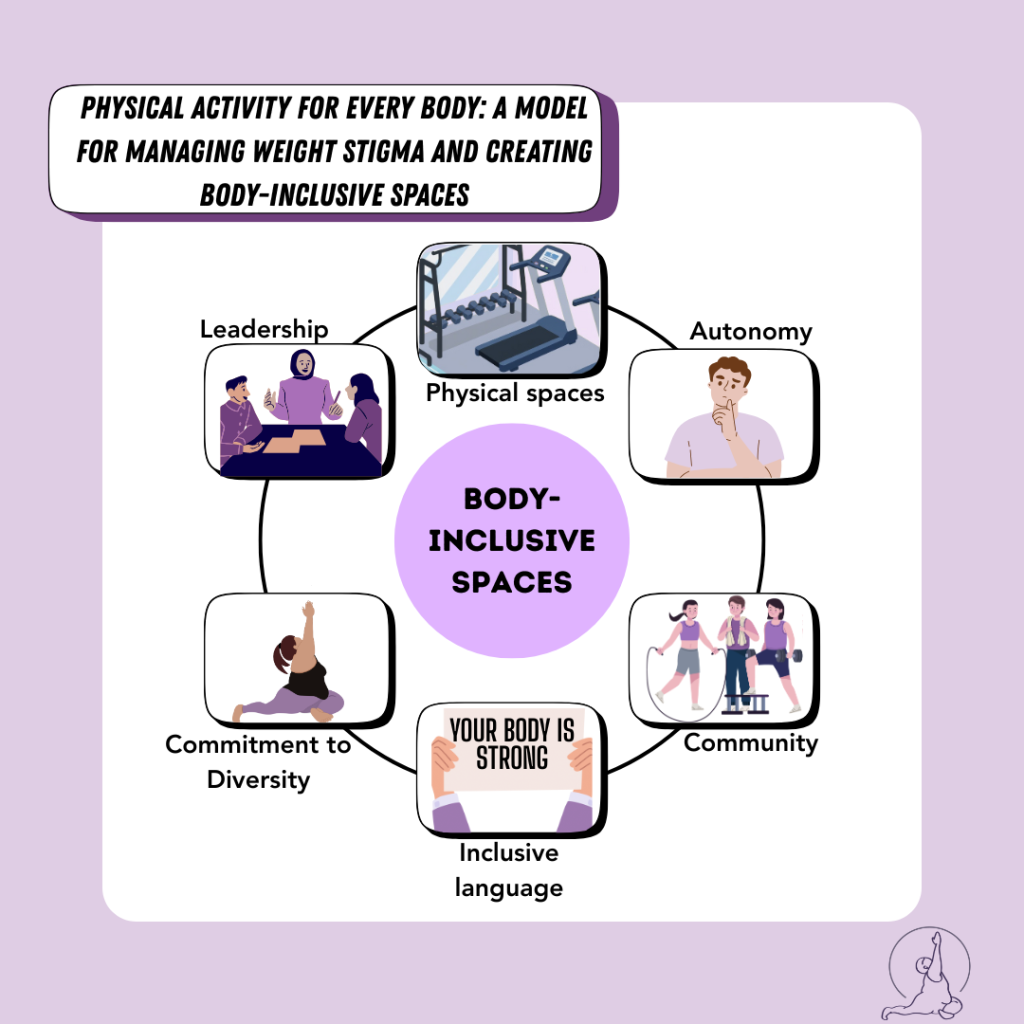
Physical activity for every body

This article proposes a new model for “body-inclusive” physical activity spaces, based on the Health at Every Size (HAES) principles. This includes prioritizing participation, belonging, and health at any size, rather than focusing on weight loss or obtaining an ‘ideal’ body composition. The aim of this model is to create fitness spaces that are more equitable and supportive to help reduce weight stigma and support long-term health. These spaces are designed to accommodate and welcome individuals of diverse body sizes, with an emphasis on moving for movement’s sake.

LINK

Pickett, A.C., & Cunningham, G.B. (2016). Physical activity for every body: a model for managing weight stigma and creating body-inclusive spaces. Quest, 69, 19–36. https://doi.org/10.1080/00336297.2016.1145129

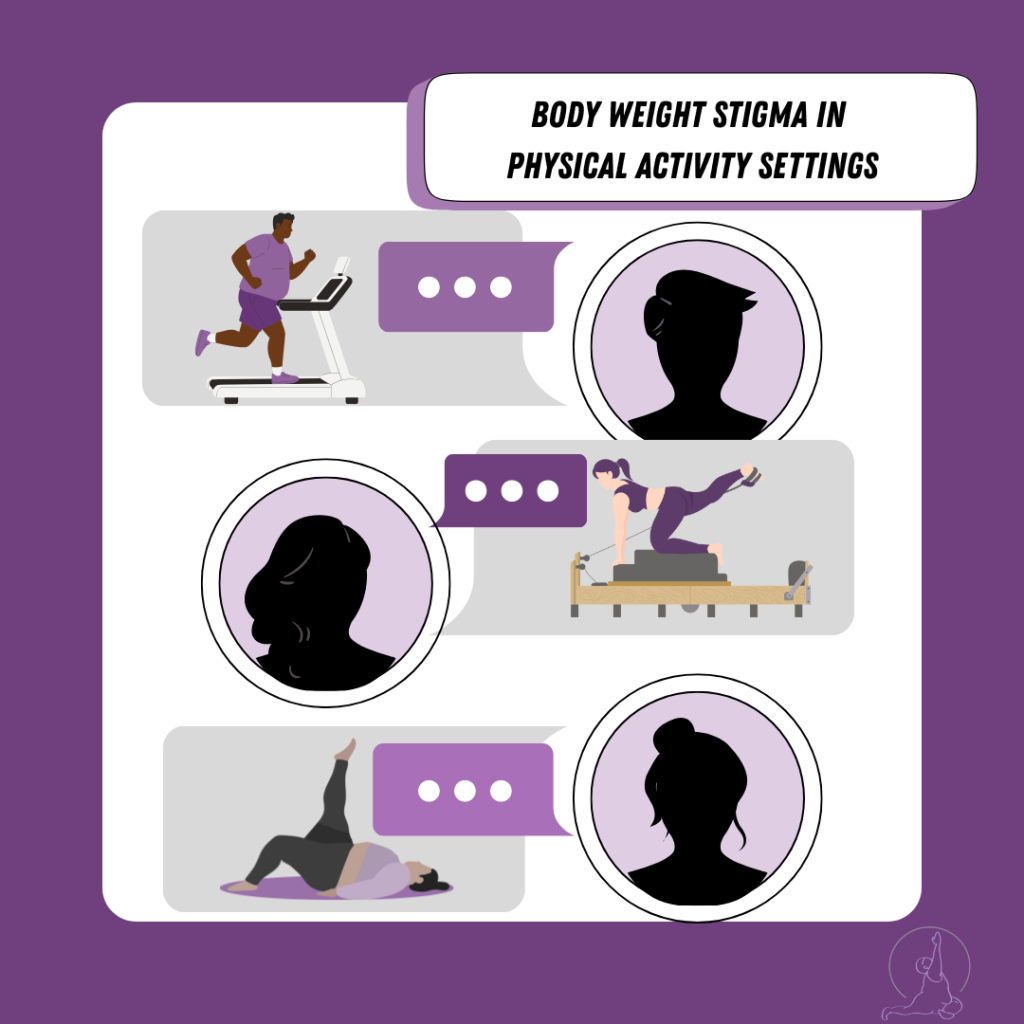
Body weight stigma in physical activity settings

The authors of this article interviewed nine individuals who have experienced weight stigma in physical activity settings, to explore their lived experiences. Many of these individuals described avoiding gyms or group exercise due to fear of judgment, thus reducing their opportunities to benefit from the positive effects of physical activity. Therefore, the authors call for body-inclusive spaces to support equitable access to exercise and promote health for all. These body-size-affirming spaces involve facility design, programming, and staff attitudes that do not assume a “thin ideal”.

LINK
Pickett, A.C., & Cunningham, G.B. (2018). Body weight stigma in physical activity settings. American journal of health studies, 33, 21. https://doi.org/10.47779/ajhs.2018.53

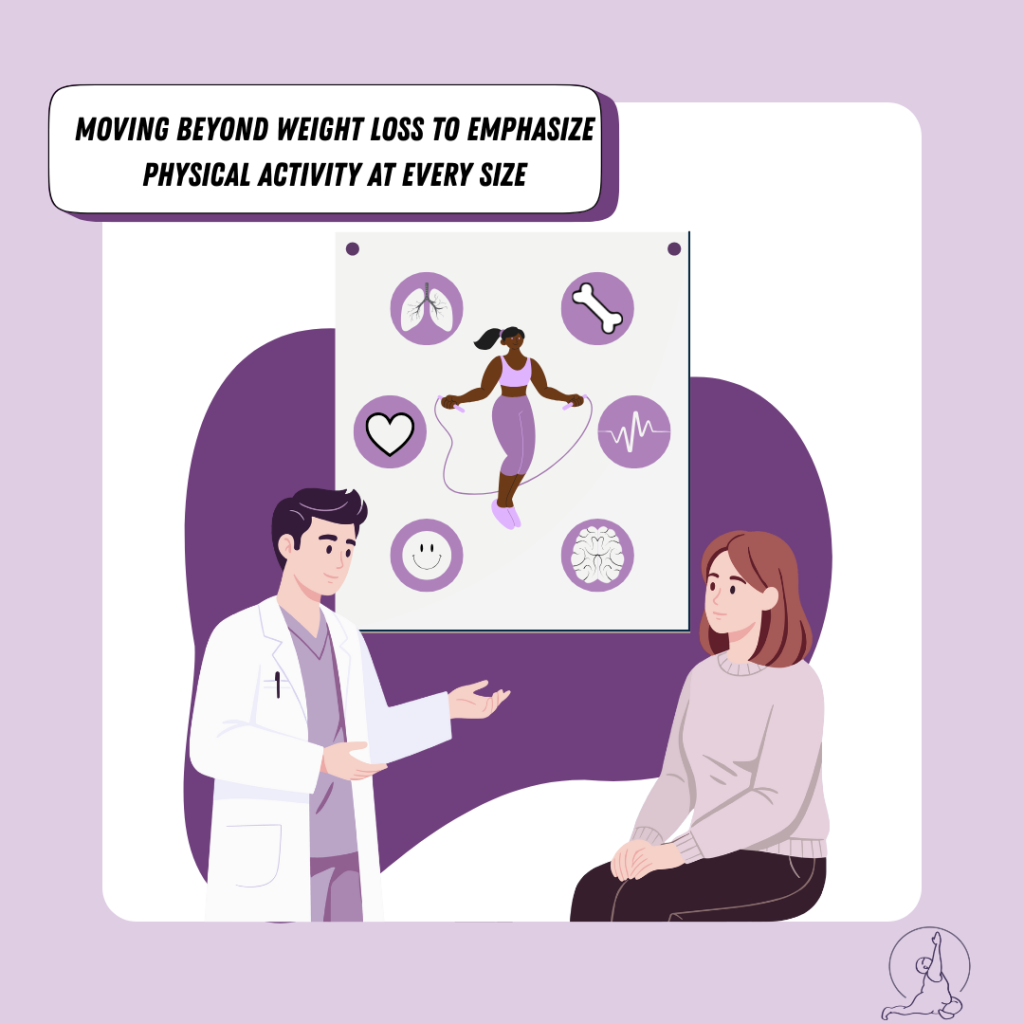
Moving beyond weight loss to emphasize physical activity at every size

In this essay, the authors highlight conversations for health providers to focus on healthy behaviours like physical activity for their patients, rather than weight loss. They argue that the long-term maintenance of weight loss is rare, and that stigma related to the provider’s assessment of body weight is associated with medication nonadherence, mistrust, and avoidance of medical care. Therefore, providers should emphasize physical activity as a vital sign over evaluations like body mass index to shift patient assessments toward more meaningful, behaviour-based health indicators.

LINK
Dollar, E., Berman, M., & Adachi-Mejia, A.M. (2017). Do no harm: moving beyond weight loss to emphasize physical activity at every size. Preventing chronic disease, 14, E34, 170006. https://doi.org/10.5888/pcd14.170006

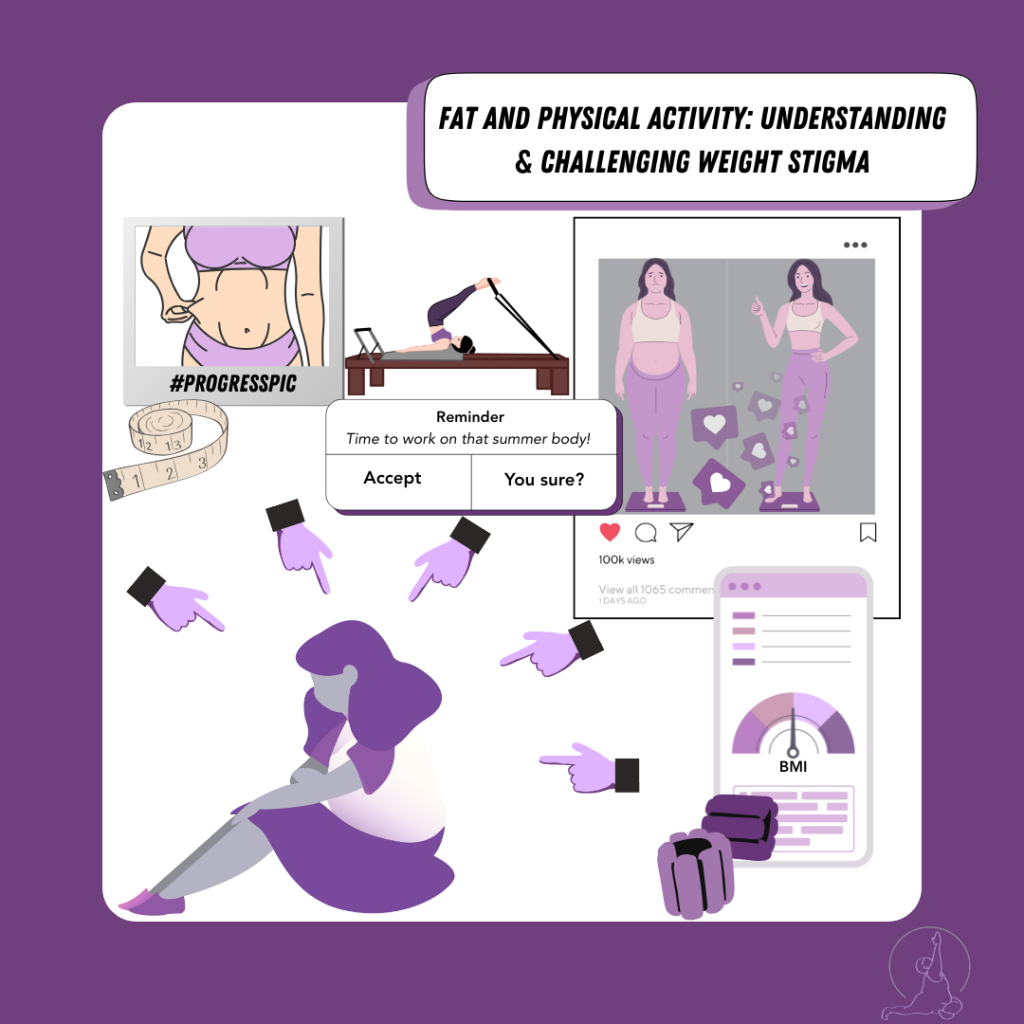
Fat and physical activity: understanding and challenging weight stigma

This paper serves as the introduction to a special issue. It refers to social, cultural, and critical theory to argue that stigma, social norms, and the design of physical activity spaces influences who feels welcome or able to participate. The authors describe how physical activity has been prescribed as the solution to the pathologized problem of obesity, and that fear of ‘fat’ can drive people’s relationship with exercise. Since fatness has been stigmatized, such that it is a socially marginalized identity, higher body weight individuals lack role models, which creates a further barrier to participating in physical activity.

LINK
Rich, E., & Mansfield, L. (2018). Fat and physical activity: understanding and challenging weight stigma. Fat studies, 8 (2), 99-109. https://doi.org/10.1080/21604851.2019.1552823

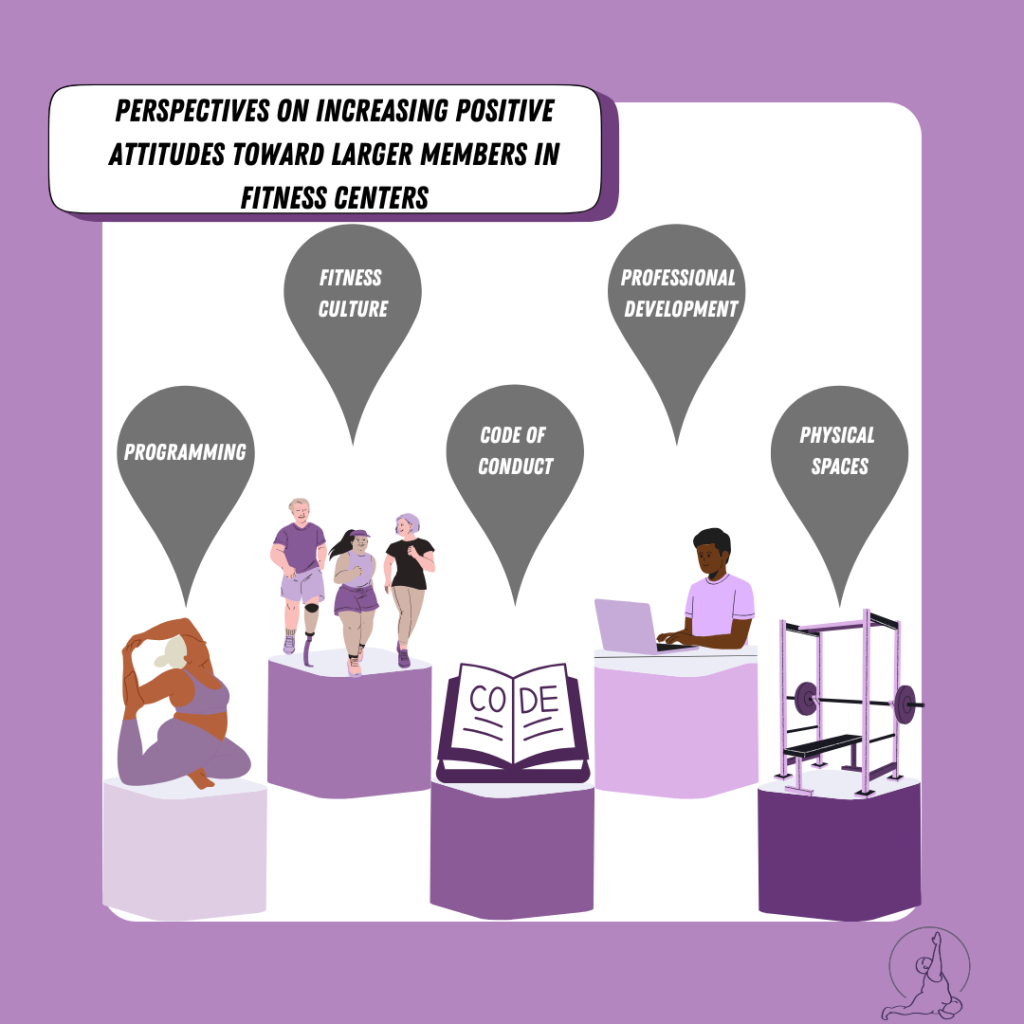
Perspectives on increasing positive attitudes toward larger members in fitness centers

This research study measured anti-fat attitudes, using a 47-item questionnaire, to determine strategies for increasing acceptance and inclusion of larger-bodied individuals. A variety of individuals were assessed, including those who were currently members, past members, and employees of fitness centers. Based on the perspectives of the studied individuals, five main concepts were found: programming, fitness culture, code of conduct, professional development, and physical environment. Ultimately, the authors emphasize the importance of promoting autonomy in adopting weight-neutral attitudes and behaviours.

LINK
Souza, B.J., & Ebbeck, V. (2018). Perspectives on increasing positive attitudes toward larger members in fitness centers. Journal of applied sport psychology, 30, 96–118. https://doi.org/10.1080/10413200.2017.1337822

Weight-inclusive physical activity

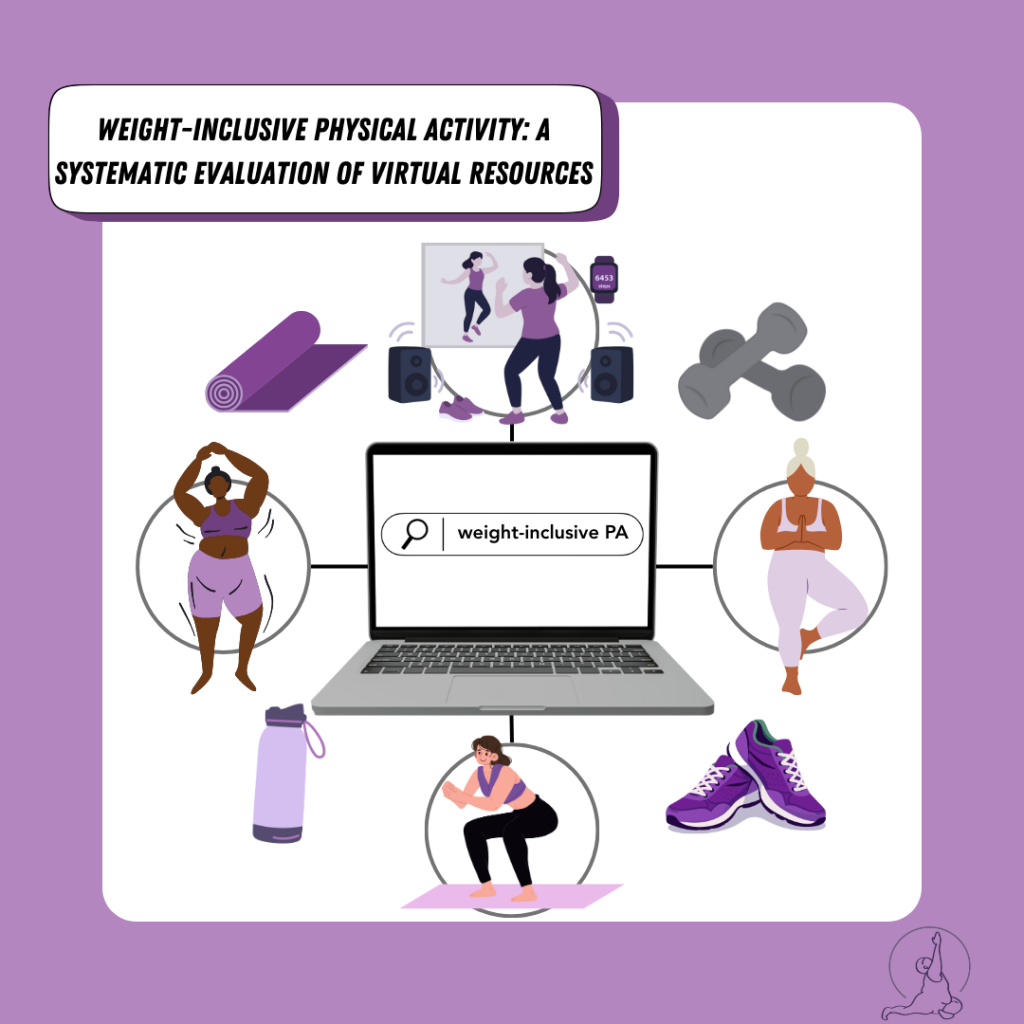
The authors of this article identified a small yet growing set of physical activity resources that follow weight-inclusive principles. However, many of these resources contained ambiguous messaging or lack clarity on adapting physical activities for various body types. Despite this, the authors identified that some of the available resources succeeded in emphasizing accessibility, body respect, and sustainable engagement in physical activity. They suggest that more research into weight-inclusive resources should be conducted and shared to benefit those who may feel alienated by traditional fitness messaging.

LINK
Sutton, M., Stanley, S., Doherty, A., Driediger, M., Calogero, R., Sabiston, C.M., Meadows, A., Maharaj, A., & Pila E. (2025). Weight-inclusive physical activity: a systematic evaluation of virtual resources. Journal of physical activity and health, 22 (4), 502–511. https://doi.org/10.1123/jpah.2024-0571

Enter Your Details for Instant Download

Enter Your Details for Instant Download